
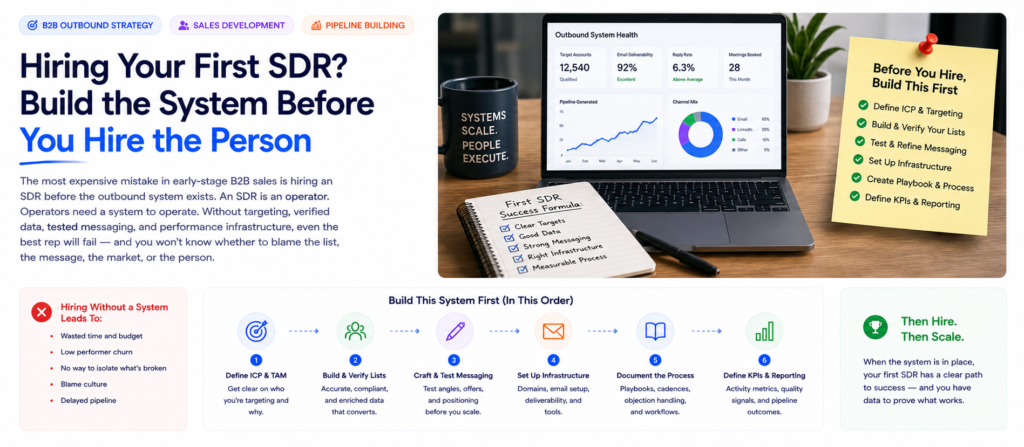
Hiring Your First SDR? Build the System Before You Hire the Person
The most expensive mistake in early-stage B2B sales is hiring an SDR before the outbound system exists. An SDR is an operator. Operators need a system to operate. Without targeting, verified data, tested messaging, and performance infrastructure, even the best rep will fail — and you won’t know whether to blame the list, the message, the market, or the person.
 Konnektys TeamJune 8, 2026 · 13 min read · B2B Outbound Strategy
The Conversation That Signals a System Problem
One of the most predictable conversations in early-stage B2B sales goes like this:
“We’re ready to hire our first SDR.”
“What list will they be working?”
“Something from Apollo.”
“What’s the opening message?”
“That’s what we’re hiring the SDR to determine.”
At that point, the problem is clear. The SDR isn’t joining a sales system. They’re being asked to build one from scratch — on a salary, on a clock, with a quota hanging over them before the foundation even exists.
This is where most outbound programmes fail before the first email is sent. The founder hires an SDR because pipeline needs to grow. The SDR fails because pipeline can’t grow without a system underneath it. The founder concludes that the SDR wasn’t good enough, or that outbound doesn’t work for their market.
Neither conclusion is usually true.
Why SDRs Are Operators, Not Architects
This distinction is the core of everything that follows, so it’s worth being precise about it.
The SDR’s Job
Execute a defined outbound process — contact the right people, with the right message, at the right time, and convert interest into qualified meetings. SDRs who excel at this are good at volume, discipline, objection handling, and follow-through. They are specialists in execution.
Building an Outbound System
A different skill set entirely. Requires ICP research, market analysis, data sourcing strategy, messaging experimentation, infrastructure decisions, and performance diagnostics. It is a strategy and operations function, not a sales execution function.
When a founder hires an SDR expecting them to do both jobs simultaneously, they’re asking for a skill set that very few people have — and paying a sales salary for work that should have been done before the hire.
The SDR ends up spending their first 60–90 days building the infrastructure they need to do their actual job, instead of doing their actual job. This is not an SDR performance problem. It is an organisational sequencing problem.
Why Great SDRs Fail in Broken Systems
Imagine hiring a talented, motivated, experienced SDR. On Day 1, you hand them:
- ✗A generic Apollo export filtered by industry and headcount, unverified
- ✗No ICP definition beyond “companies like our existing clients”
- ✗No buyer personas specifying who to reach within those companies
- ✗No proven messaging — just a rough value prop the founder uses in demos
- ✗No intent signals or buying triggers to prioritise outreach
- ✗No defined outbound process: what to send, when, how many times, what to do when someone replies
What happens over the next 30 days? The SDR spends their time figuring out who to contact, which companies to prioritise, what messages resonate, and how to qualify interest. They are building your go-to-market strategy on your budget.
When meetings don’t materialise, the founder faces an unfalsifiable problem. Is the list wrong? Is the messaging off? Is the market not ready? Is the SDR underperforming? Without a system, you have no way to separate these variables. Every metric is confounded by every other.
A great rep with a bad system often looks like a bad rep. The failure shows up in the metrics, but the cause is in the infrastructure.
This is the pattern underlying most first SDR failures. Not lack of talent. Not wrong channel. Not wrong market. A system that was never built — and a rep that was hired to build it instead of run it.
The Real Cost of Hiring Too Early
Let’s run the math explicitly, because the numbers make the sequencing argument clear.
First SDR — Year-One Cost
| Base salary | $50,000–$65,000 |
| Commission / OTE target | $15,000–$25,000 |
| Benefits, equipment, tooling | $8,000–$15,000 |
| Management time (onboarding + coaching) | $10,000–$20,000 equiv. |
| Total year-one cost | $85,000–$125,000 |
Pre-Hire System Build Cost
| ICP research and TAM analysis | $2,000–$8,000 |
| Contact list building and verification | $1,500–$5,000 |
| Messaging validation (test campaigns) | $1,000–$3,000 |
| Infrastructure setup (domains, warmup, sequencing) | $500–$2,000 |
| Total pre-hire system cost | $5,000–$18,000 |
The system costs roughly 5–15% of the first SDR’s annual cost. It eliminates 60–90 days of wasted ramp time. It gives the SDR clean inputs from Day 1. And it produces performance data that is actually interpretable — so if results aren’t materialising, you can diagnose whether the problem is targeting, messaging, data quality, or execution.
That’s not a cost. It’s insurance on the much larger investment you’re about to make.
What Must Exist Before Your First SDR Starts
Six components need to be in place before the first SDR touches the first contact. Each one is a prerequisite — not a nice-to-have, not something the SDR can build while also hitting activity targets.
1. Ideal Customer Profile Definition
The ICP is the boundary condition for everything else in the outbound system. Without it, there is no basis for building a contact list, targeting outreach, qualifying interest, or measuring results by segment.
A working ICP is specific enough that two different people, given the same definition, would build essentially the same list. That means specifying:
- Industry and sub-vertical — not just “SaaS” but “B2B SaaS companies selling to mid-market revenue teams”
- Company size — headcount range and revenue range
- Geography — specific markets, not “global”
- Technology stack — what tools the target company uses that your offer fits, replaces, or integrates with (technographic data moves from a nice-to-have to a core targeting input here)
- Growth indicators — stage, recent funding, hiring trajectory
- Deal-breakers — company types or attributes that explicitly disqualify regardless of other fit
Market research and TAM analysis does this definitional work properly — establishing the actual universe of accounts that meet your criteria before any outreach begins. The ICP isn’t a document. It’s the operational foundation that every downstream decision builds on.
2. A Verified, Signal-Enriched Contact List
The SDR should start Day 1 with a contact list that has already been built, verified, and enriched. Not a raw Apollo export. Not a spreadsheet of names and job titles. A list where every entry has been confirmed as a valid, deliverable email address attached to a current, correct role at a company that meets the ICP criteria.
As we cover in our outbound campaigns failure analysis, list quality is one of the most common root causes of underperformance that gets misattributed to copy or SDR execution.
Contact list building constructs this list against precise ICP criteria. Email finding and verification confirms deliverability. The SDR’s job is to work the list — not to build and clean it.
3. A Tested Messaging Framework
Tested is the operative word. Not messaging that sounds reasonable in a leadership meeting. Messaging that has been put in front of real prospects and measured against real responses.
The minimum viable messaging framework before an SDR starts:
One-sentence value proposition — what problem, for whom, to what outcome
3–5 subject line variants — tested for open rate against the ICP
A Day 1 email — built around a specific observation about the prospect’s situation, not a generic value prop (see our cold email reply rate guide)
Follow-up sequence — 4–6 touches with distinct angles: proof, reframe, diagnostic question, breakup
Objection responses — scripted replies to the four or five objections that come up in 80% of early conversations
Call script — opening, qualification criteria, next step logic
This framework doesn’t need to be perfect. It needs to be good enough to generate interpretable data. The SDR refines it through iteration — but they need something tested to iterate from, not a blank page.
4. An Intent and Signal Layer
Not all accounts in the ICP are equal at any given moment. Some are actively evaluating solutions — recently funded, hiring in relevant roles, replacing a tech stack component, under new leadership. Others are completely stable and have no near-term reason to change anything.
An SDR without a signal layer treats these accounts as equivalent, which means effort is distributed randomly across a pool of very different priorities.
Hiring Intent
Hiring intent data surfaces companies aggressively hiring roles that signal operational gaps your offer addresses.
Buyer Intent
Events and buyer intent data flags accounts at inflection points — funding rounds, leadership changes, product launches.
AI-Powered Research
AI-powered lead research cross-references signals against the ICP universe to produce a prioritised account queue.
The SDR who starts Day 1 with a prioritised queue based on real signals is doing a fundamentally different job from the SDR who starts with an alphabetical spreadsheet. The first SDR books meetings. The second SDR builds a database.
As our AI prospecting guide explains: fit tells you who could buy; signals tell you who might buy now.
5. Diagnostic Performance Metrics
Before the first email goes out, the measurement framework needs to be in place. Not because you’ll have data immediately — but because the metrics you track determine what you can learn from the data you do generate.
The metrics that matter for diagnosing system health (not just SDR performance):
| Metric | What It Diagnoses | Warning Threshold |
|---|---|---|
| Email open rate by segment | Deliverability vs. subject line problems | < 20% |
| Reply rate by segment & persona | Which ICP sub-segment is most responsive | < 2% |
| Positive reply rate | Genuine interest vs. total engagement | < 0.5% |
| Meeting conversion rate | Replies converting to booked meetings | < 20% |
| List bounce rate | Data quality | > 3% |
| Domain inbox placement rate | Infrastructure health | < 65% |
CRM data enrichment ensures the CRM that receives this data is accurate and current — so pipeline tracking reflects what’s actually happening, not what happened to previously enrolled contacts with outdated records.
6. Outbound Infrastructure
The SDR needs to be able to send at volume without damaging the company’s email reputation or their own productivity. That means:
Secondary Sending Domains
Cold outreach never runs from the primary company domain. Outreach risk is fully separated from business risk.
Warmed Inboxes
3–4 weeks of warmup on each sending domain before cold sends begin. No shortcuts.
Sequencing Software
Automated multi-touch sequences with engagement-based triggers. Follow-ups run every time, on schedule.
Unified Inbox
All replies from all sending accounts in one place for fast response. Warm leads don’t go cold waiting for a reply.
Email infrastructure setup handles domain procurement, DNS configuration, warmup, and the sequencing layer — so the SDR can start executing on Day 1 instead of spending their first two weeks configuring tools they’ve never used before.
An SDR who spends their first three weeks on infrastructure setup is not selling. They are doing IT work on a sales salary.
How to Validate the System Before You Hire
The system doesn’t need to be perfect before the hire. It needs to be validated — meaning you have enough evidence that the targeting is right, the messaging works, and the infrastructure is functioning to give an SDR clean inputs.
Validation is faster and cheaper than most founders expect.
Run a 300-email pilot — yourself or with a fractional operator
If the pilot produces these numbers, the system is validated. Hire the SDR to scale and improve what you’ve already proved works.
If the pilot doesn’t produce these numbers, you’ve spent $3,000–$8,000 on a pilot instead of $90,000 on a first SDR year with the same result — and you know exactly which variable to fix before trying again.
Cold email and LinkedIn outreach run as a managed programme is how many companies handle this validation phase without taking the founder’s attention away from everything else that competes for it.
The Signals That Tell You You’re Ready
Run through this checklist before signing an SDR offer letter:
ICP Readiness
- ICP fits in one sentence, 20 words or fewer
- Two people given the same ICP definition would build essentially the same list
- Deal-breakers are explicitly defined, not just implied
Data Readiness
- Contact list built against precise ICP criteria, not broad filters
- Email addresses verified within the last 30 days
- Bounce rate on a test send confirmed below 3%
- Signal layer in place: accounts prioritised by buying intent, not alphabetically
Messaging Readiness
- Value proposition tested against real prospects, not just refined in internal meetings
- At least one email sequence has produced replies from the target ICP
- Objection handling scripted for the top four or five objections
Infrastructure Readiness
- Secondary sending domains purchased, configured, and fully warmed
- Sequencing software set up and tested
- Unified inbox in place for reply management
- Domain rotation schedule established (90-day calendar)
Metrics Readiness
- CRM is set up to receive and track contacts from the sequence
- Reporting exists for reply rate, positive reply rate, meeting rate, and bounce rate by segment
- Baseline performance data exists from the validation pilot
If more than two items on this checklist are unchecked, build before you hire.
The Alternative When You’re Not Ready Yet
Hiring an SDR before the system exists is not the only way to build pipeline. For companies that need outbound results before they’re ready to hire, there are two practical alternatives:
Fractional Outbound Operator
A part-time specialist who builds the targeting, messaging, infrastructure, and initial campaign — then hands off a functioning system when the hire is ready. Covers system-building work with someone who has done it before, without the full-time cost.
Managed Outbound Programme
End-to-end B2B lead generation operates the full outbound stack as a managed system, generating pipeline in the short term and producing the validated playbook the eventual SDR hire can step into.
When checking whether cold email is even the right primary channel for your stage and offer, our cold email qualification framework walks through the TAM, ICP, deal economics, and offer validation questions that determine whether to invest in outbound at all.
What Ramp Time Looks Like With vs. Without a System
SDR ramp time — the period between start date and consistent quota attainment — is typically cited at 3–4 months for an experienced hire and 5–6 months for a first hire. These numbers assume a functioning system. Without one, they’re optimistic.
Without a System
| Month | Primary Activity | Pipeline Output |
|---|---|---|
| 1 | Building ICP definition, scraping lists | Near zero |
| 2 | Testing messaging angles from scratch | Sporadic replies, no pattern |
| 3 | Iterating on what appears to be working | Inconsistent meetings |
| 4 | Starting to find signal in the data | First real pipeline |
| 5–6 | Optimising a system they built alone | Approaching quota |
With a System
| Month | Primary Activity | Pipeline Output |
|---|---|---|
| 1 | Learning the system, executing at partial volume | First replies within week 2 |
| 2 | Full volume execution, first meetings | Consistent meetings |
| 3 | Iterating on a working baseline | Approaching quota |
| 4+ | Optimising and scaling | At or above quota |
A first SDR in a functioning system reaches quota 6–8 weeks faster than the same SDR starting from scratch. At a fully loaded SDR cost of $8,000–$10,000 per month, that’s $48,000–$80,000 of avoided ramp cost — from a system that cost $5,000–$18,000 to build.
FAQ: First SDR Hire Questions Answered
When should a startup hire its first SDR?
+
What should be in place before hiring an SDR?
+
Why do first SDR hires fail?
+
How long should it take to validate an outbound system before hiring?
+
What is the typical SDR ramp time?
+
What is the difference between an SDR and a BDR?
+
What is a realistic reply rate for a first SDR outbound campaign?
+
Should a founder run outbound themselves before hiring an SDR?
+
What role does intent data play in SDR performance?
+
What outbound tools does an SDR need on Day 1?
+
The Sequence That Changes the Outcome
The correct order for building outbound pipeline is not hire → figure it out → eventually get results.
In that order, the SDR starts generating qualified meetings within weeks. The performance data is interpretable. Coaching is possible. Iteration is directional.
In the wrong order, the SDR spends their first 60–90 days building what should have been there before they arrived. The performance data is ambiguous. The post-mortem blames the person instead of the process.
The first SDR hire is not the growth strategy. It’s the amplifier. If the system is strong, they amplify results. If the system is missing, they amplify confusion.
Build the System First. Then Hire the Person to Run It.
Konnektys helps B2B companies build the outbound foundation before and alongside headcount — from ICP and TAM definition and AI-powered lead research to verified contact lists, email infrastructure, and fully managed cold email and LinkedIn outreach.
- The Conversation That Signals a System Problem
- Why SDRs Are Operators, Not Architects
- Why Great SDRs Fail in Broken Systems
- The Real Cost of Hiring Too Early
- What Must Exist Before Your First SDR Starts
- How to Validate the System Before You Hire
- The Signals That Tell You You’re Ready
- The Alternative When You’re Not Ready Yet
- Ramp Time: With vs. Without a System
- FAQ
Ready to build the system before you hire? We’ll build and manage the full outbound foundation for you.
Talk to Konnektys →Share this article:
Related articles
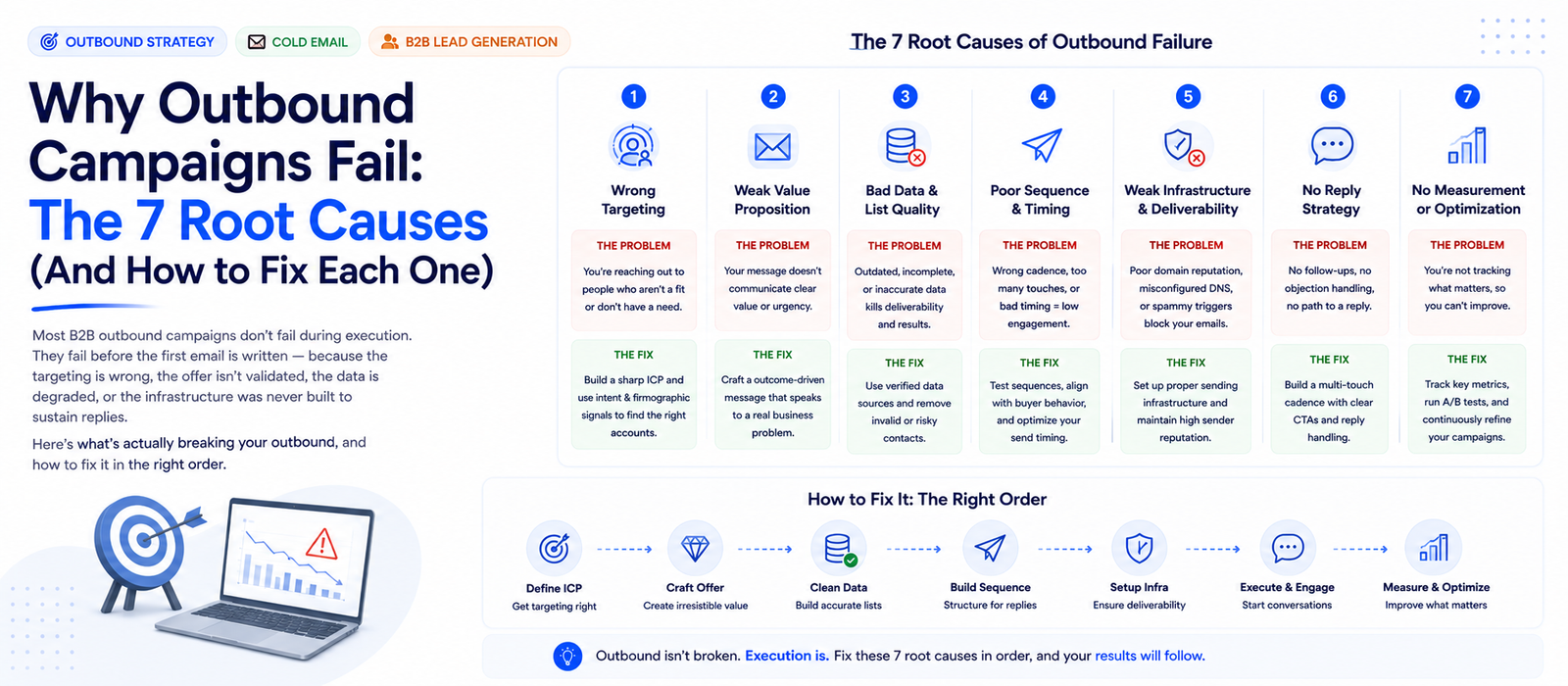
Why Outbound Campaigns Fail: The 7 Root Causes (And How to Fix Each One)
Konnektys Team · 7 Jun, 2026
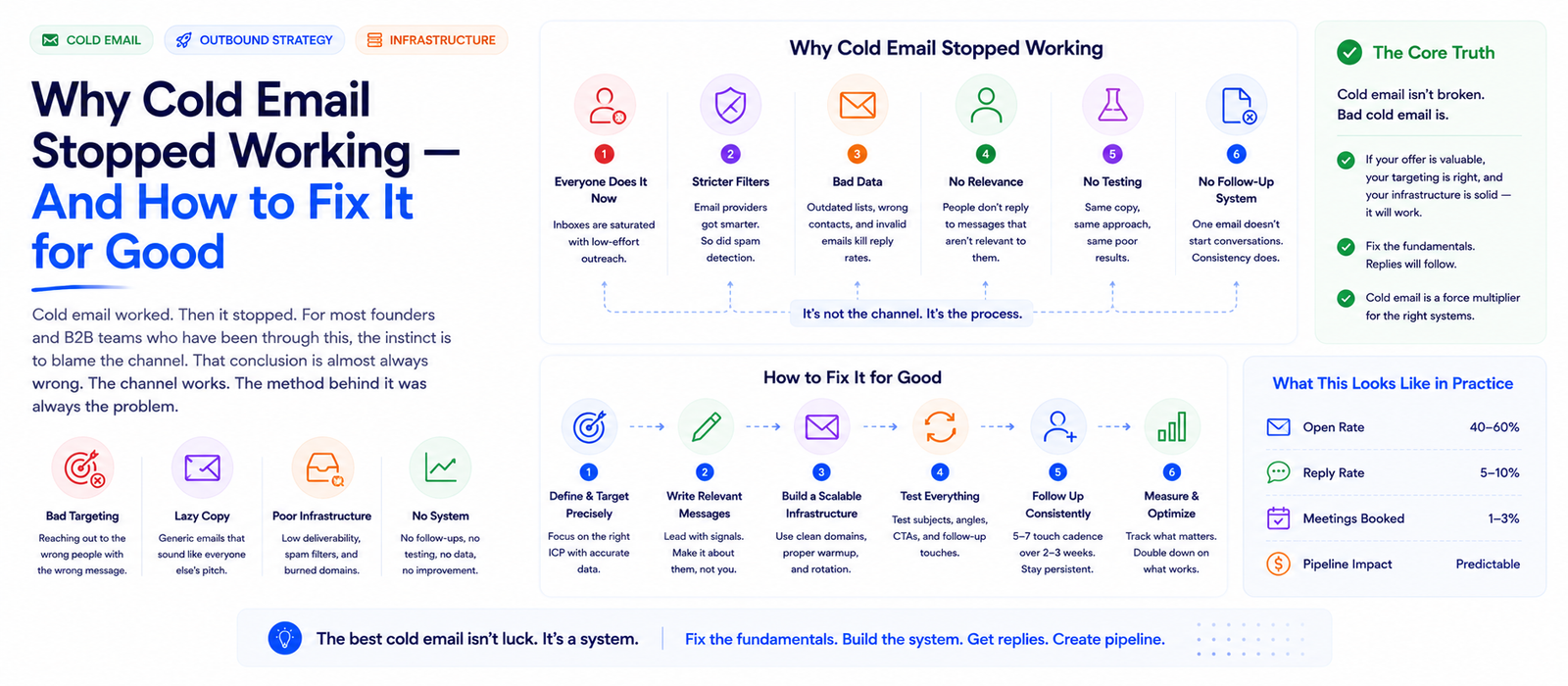
Why Cold Email Stopped Working — And How to Fix It for Good
Konnektys Team · 19 May, 2026
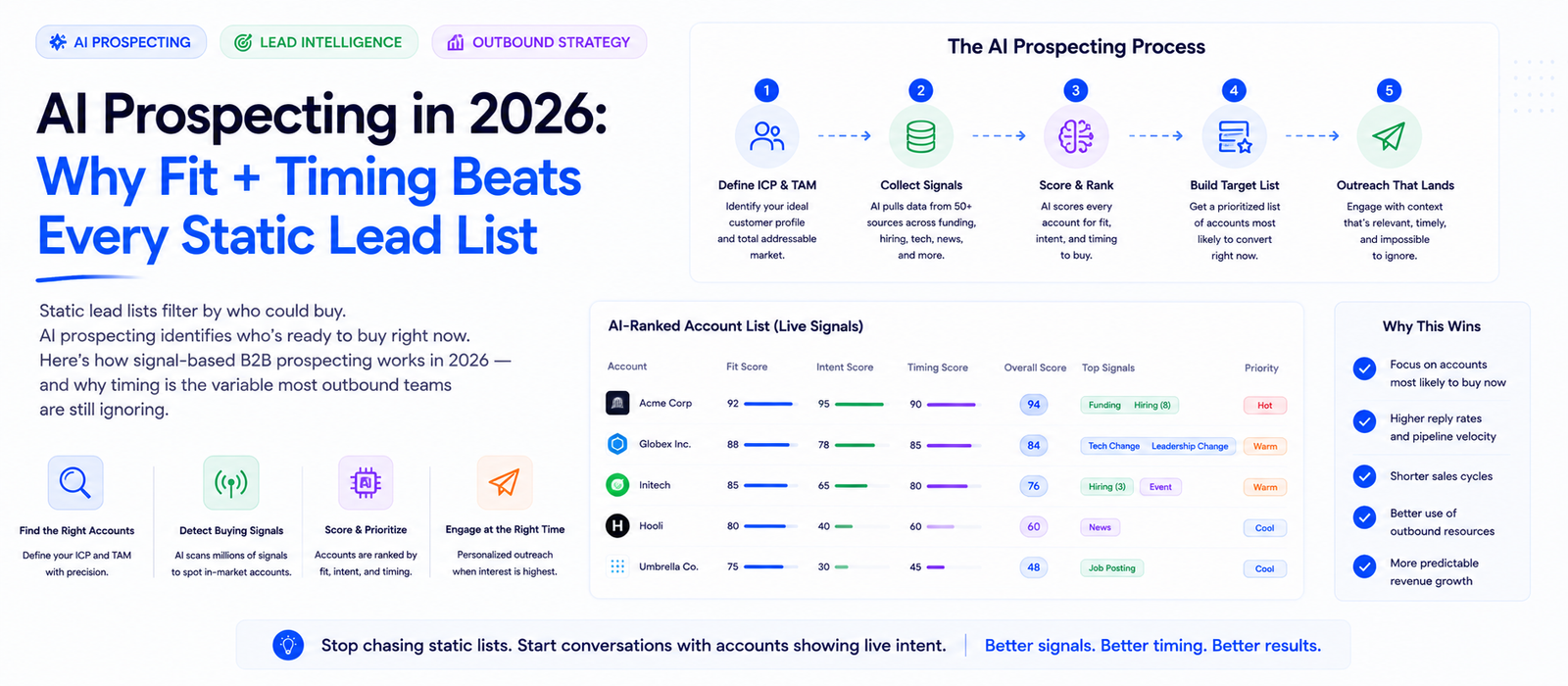
AI Prospecting in 2026: How Signal-Based Targeting Is Replacing List Buying
Konnektys Team · 30 May, 2026